Why is the current Ebola outbreak worrying health officials?
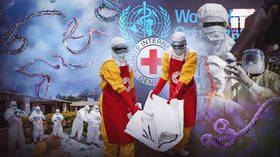
Health authorities across Africa are struggling to contain an Ebola outbreak, centered in the Democratic Republic of the Congo (DR Congo).
According to the World Health Organization (WHO), more than 900 suspected Ebola cases have now been registered across the DR Congo, including 101 laboratory-confirmed infections. In neighboring Uganda, health authorities have confirmed five cases and one death linked to the virus.
WHO chief Tedros Adhanom Ghebreyesus said response efforts are being hampered by delays in identifying cases, warning that health authorities are effectively being forced to “play catch-up” as the outbreak expands. Suspected deaths linked to the virus have already surpassed 220.
Although the WHO continues to assess the international threat level as low, it has raised the risk assessment inside the DR Congo from “high” to “very high.”
The outbreak has revived international concern not only because of Ebola’s deadly reputation, but also because it involves the rare Bundibugyo strain.
Is Ebola spreading in the DR Congo?
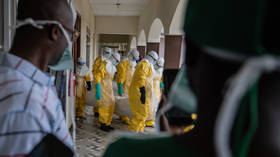
The latest outbreak has primarily affected eastern regions of the DR Congo, where healthcare systems already face pressure from armed violence, mass displacement, and limited infrastructure.
The WHO has classified the outbreak as a public health emergency of international concern, reviving memories of past Ebola epidemics that overwhelmed fragile healthcare systems and triggered international alarm.
The current epidemic, officially declared on May 15, is the DR Congo’s 17th recorded Ebola outbreak since the virus was first identified in 1976. The virus was first detected during two simultaneous outbreaks – one near the Ebola River in what was then Zaire, now the DR Congo, and another in Nzara, in present-day South Sudan.
The deadliest Ebola epidemic on record occurred in West Africa between 2014 and 2016 and was caused by the Zaire ebolavirus strain. More than 28,600 people were infected across Guinea, Liberia, and Sierra Leone, and over 11,300 people died.
How dangerous is the Ebola virus?
During outbreaks involving the Zaire strain, fatality rates have historically reached between 70% and 90%.
The second-largest Ebola epidemic in history occurred in the DR Congo between 2018 and 2020. The outbreak was also caused by the same Ebola virus strain. According to final WHO reports, 3,481 cases were recorded in the eastern provinces of North Kivu and Ituri, while 2,299 people died during the epidemic.
What is the Bundibugyo strain of Ebola?
The Bundibugyo virus is among the rarest known forms of Ebola, first identified in Uganda in 2007. However, according to the WHO, fatality rates in previous Bundibugyo outbreaks ranged between 30% and 50%, which is lower than for the Zaire strain.
What makes the current outbreak concerning is the absence of an approved vaccine and therapeutics targeting this strain. As of 2026, two WHO-approved Ebola vaccine regimens – Ervebo and Zabdeno/Mvabea – are available globally, both developed specifically against the Zaire strain.
Several countries have also developed national Ebola vaccines and vector-based analogues, including Russia’s GamEvac-Combi vaccine, officially presented in January 2016 as a combined vector-based preparation for the prevention of Ebola hemorrhagic fever caused by the Zaire strain of the virus.
The virus is carried by fruit bats and spreads through direct contact with infected animals or bodily fluids from infected individuals. Symptoms of Bundibugyo virus disease include fever, severe headaches, muscle and body pain, weakness, fatigue, sore throat, vomiting, diarrhea, stomach pain, and loss of appetite. In severe cases, patients may also experience unexplained bleeding or bruising.

What is being done to stop the spread of Ebola?
Governments across Africa and beyond have introduced measures aimed at preventing the virus from spreading across borders.
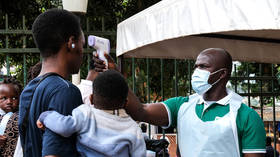
Rwanda has temporarily closed its border with the DR Congo, while Burundi, Zambia, Tanzania, Ethiopia, Nigeria, Kenya, and Burkina Faso tightened health screening and sanitary monitoring procedures. Uganda also suspended flights to neighboring DR Congo following the outbreak.
Several countries outside Africa have imposed travel restrictions or expanded medical controls. Bahrain, the Bahamas and Jordan suspended entry for travelers arriving from affected states, while Thailand introduced temperature screening and 21-day health monitoring for passengers arriving from the DR Congo and Uganda. Vietnam and Indonesia have also stepped up health screening measures.
Canada announced plans to suspend immigration documents for residents of the DR Congo, Uganda, and South Sudan for 90 days, including previously approved visas and electronic travel authorizations.
The US introduced emergency restrictions targeting foreign nationals who recently visited the DR Congo, Uganda, or South Sudan. American citizens returning from those countries are permitted to enter only through Washington Dulles International Airport, where additional health checks have been implemented.
The International Federation of Red Cross and Red Crescent Societies (IFRC) has also expanded its Ebola response operations in eastern DR Congo and neighboring countries, deploying 200 volunteers. They are going door-to-door in communities to explain how the virus spreads, counter misinformation, and encourage early treatment.
The UN has allocated $60 million from its emergency response fund to help contain the outbreak.
The WHO has reported the delivery of 11 tonnes of emergency medical supplies to support Ebola response operations in the DR Congo. The agency has already allocated $3.9 million from its Contingency Fund for Emergencies.
How are African governments responding?
African officials have increasingly emphasized the need for continent-led coordination rather than relying solely on outside intervention.
Uganda has backed a proposal by the Africa CDC to establish a continental Ebola response coordination hub in Kampala. During talks on Friday with the organization’s director general, Jean Kaseya, Ugandan President Yoweri Museveni endorsed plans for an Incident Management Support Team designed to coordinate surveillance and outbreak response efforts across the continent.
“Ebola only becomes deadly when there is lack of attention. Otherwise, it is very manageable,” Museveni said.
South African President Cyril Ramaphosa has also warned that the outbreaks in the DR Congo and Uganda pose a serious regional threat, calling for stronger cross-border coordination. “Ebola does not respect borders,” he noted.
Which countries are most at risk from Ebola?
Kaseya said ten African countries are currently considered at high risk because of their geographic proximity and regional mobility links with the affected states. They include Kenya, South Sudan, Rwanda, Zambia, the Central African Republic, the Republic of the Congo, Tanzania, Ethiopia, Angola, and Burundi.
According to Africa CDC, nearly $500 million has been committed or pledged during a high-level virtual ministerial briefing on Monday convened by the organization together with the African Union to coordinate Ebola response efforts in the DR Congo and Uganda.
Officials endorsed a continental preparedness and response plan requiring at least $319 million between June and November 2026 to strengthen outbreak control.
Ramaphosa announced that Pretoria had doubled its contribution to Africa CDC’s Ebola response to $5 million, while the Gates Foundation pledged an additional $5 million to Africa CDC and $10 million to the WHO.
How is Russia assisting the response?
Russia has pledged logistical and epidemiological assistance to African countries affected by the outbreak. Russia’s public health watchdog, Rospotrebnadzor, announced that Russian specialists would travel to Uganda to conduct an epidemiological investigation and support the country’s Health Ministry.
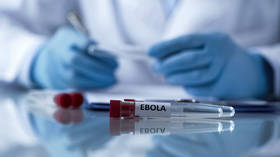
The current assistance builds on earlier Russian-backed health initiatives in East Africa. In 2024, Russia transferred a mobile anti-epidemic laboratory to Ugandan authorities, enabling rapid diagnostics of dangerous infectious diseases. The laboratory was already used in 2025 during efforts to contain a previous Ebola outbreak.
Russian medical experts have also trained more than 80 Ugandan specialists in infectious disease surveillance, laboratory diagnostics, disinfection procedures, and biological safety standards.
In 2025, Rospotrebnadzor and Ethiopia’s Health Ministry conducted simulation exercises aimed at improving Africa’s readiness for epidemiological emergencies, including rapid-response coordination and the use of Russian-supplied mobile laboratories.
Russia has also supplied Burkina Faso with a mobile laboratory capable of processing hundreds of tests daily for more than 20 infectious diseases. Moscow additionally provided technical and epidemiological assistance to Rwanda, the DR Congo, Guinea, and Ethiopia during mpox outbreaks that affected parts of Africa in 2024.