US imposes new Ebola travel curbs
The US has tightened travel rules for people returning from Ebola-affected parts of Africa, the Centers for Disease Control and Prevention (CDC) announced on Friday.
US citizens and nationals who have been in the Democratic Republic of the Congo (DR Congo) over a period of 21 days before departing for the US will not be allowed to board commercial flights bound for the US. The restriction also applies to passengers whose flights stopped in DR Congo, even if they never left the aircraft. Those affected are being told to remain outside the US until more than 21 days have elapsed since leaving DR Congo.
Americans returning from Uganda and South Sudan can still travel home, but their flights must be routed through one of four designated airports: Washington Dulles, Atlanta, Houston, or New York’s JFK.
There, travelers will face CDC screening that includes questions about their travel and symptoms, temperature checks and observation for signs of illness.
Canada has barred most foreign nationals who have recently been in DR Congo, while Israel, Qatar, Kuwait, Saudi Arabia, the UAE and Rwanda have introduced various entry or visa restrictions targeting travelers from Ebola-affected countries. Uganda has gone further, suspending flights and cross-border passenger transport with neighboring DR Congo.
Russia has stopped short of imposing an entry ban but has stepped up sanitary and quarantine controls at border checkpoints as part of its response to the outbreak.
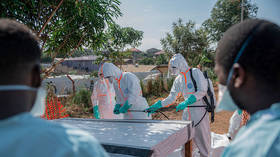
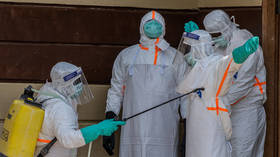
The measures come as an Ebola outbreak, which was declared on May 15, continues to roil DR Congo. It involves the Bundibugyo strain of the virus for which there are currently no approved vaccines or targeted treatments available.
Figures released by the Congolese Health Ministry on Sunday show 4,209 confirmed cases and 1,916 deaths, up from 3,674 cases and 1,621 deaths reported just seven days earlier — an increase of 535 infections and 295 fatalities in a single week. The outbreak has also spread from 49 to 53 health zones across five provinces, while the overall case fatality rate has risen from 44.1% to 45.5%.