US strategic oil reserve plunges to 44-year low
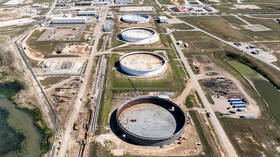
The US emergency oil stockpile has plunged to its lowest level in nearly 44 years as the US-Israeli war on Iran continues to squeeze global supplies and disrupt shipping through the Strait of Hormuz, according to Department of Energy data. The Strategic Petroleum Reserve (SPR) has shrunk by almost a third since Washington began releasing crude in March.
The reserve dropped to 283.8 million barrels for the week ending September 25, hitting its lowest level since October 1982, according to US government data. That is down roughly 32% from 415.4 million barrels in mid-March and 61% from the record 726.6 million barrels held in late 2009.
Congress created the SPR in 1975 following the Arab oil embargo to provide an emergency buffer against severe supply disruptions. Designed to hold more than 700 million barrels in underground salt caverns along the Gulf Coast in Texas and Louisiana, the reserve has been tapped heavily in recent years.

Washington pledged on March 11 to make up to 172 million barrels available as part of a coordinated 400-million-barrel release by International Energy Agency members in response to the supply crisis. Much of the US crude is being provided through exchanges rather than sold outright, meaning companies must return the oil later along with additional barrels as a premium.
Global oil inventories have fallen sharply during the conflict. Goldman Sachs estimated in May that visible crude and petroleum-product stocks were shrinking by a record 8.7 million barrels per day (bpd), nearly twice the average rate since the Iran war began in February and disruptions in the Strait of Hormuz began to interfere with shipments.
Oil flows have rebounded since then but have yet to fully recover. Energy analytics firm Kpler estimated Middle East crude exports at 12.8 million barrels per day in September – the highest since the war began but still around 6 million bpd below the 18.8 million recorded in February.
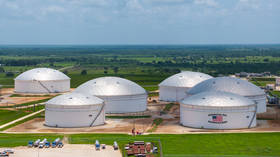
Crude exports through Hormuz were on track to average about 7.4 million bpd in September, according to preliminary Kpler data.
US President Donald Trump nevertheless touted record oil shipments through the strait on Sunday. “Last night we took a record amount of oil out from the strait, more than we took out before the war,” he told reporters, also predicting that crude prices would fall further once the conflict ends.
The Energy Department expects roughly 200 million barrels to eventually flow back into the SPR under the exchange program. Those repayments will come later, however, leaving the US with a much smaller emergency cushion in the meantime.
Not all of the crude still counted in the reserve is readily accessible. The Government Accountability Office said in June that more than a quarter of SPR oil was unavailable as of December 2025 because of construction work and cavern outages. The watchdog put the reserve’s effective drawdown capacity at just 61% of its design rate.