Stealth jets, subs, missiles: The sub-continental arms race you can’t ignore

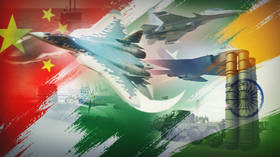
Pakistan signed a landmark defense deal with China last month to acquire 40 Shenyang J-35 fifth-generation stealth fighter jets (export variant J-35AE) to modernize the Pakistan Air Force (PAF). The agreement positions Pakistan as the first international operator of the advanced Chinese stealth aircraft. Pakistan is scheduled to receive its first batch of J-35s by late-2026, making it the first air force in South Asia to operate fifth-generation combat aircraft.
In April, Pakistan launched the first of eight Chinese-built Hangor-class submarines, expanding its undersea fleet in deepening cooperation with Beijing. The Hangor-class submarines are advanced, diesel-electric attack submarines being manufactured by China for the Pakistan Navy. They feature Air-Independent Propulsion (AIP) and are equipped with modern sensors and heavyweight torpedoes.
Pakistan-China Strategic Partnership
Islamabad and Beijing maintain a deeply integrated “all-weather strategic cooperative partnership,” with China serving as Pakistan’s primary defense supplier. According to the Stockholm International Peace Research Institute (SIPRI), China accounted for approximately 81% of Pakistan’s arms imports in 2020-2024. Imports included jets, submarines, and drones. This “threshold alliance” features extensive technology transfers, joint production (Pakistan Aeronautical Complex and China’s Chengdu Aircraft Corporation are co-developing the fourth-generation, lightweight multirole combat aircraft JF-17), and deep interoperability to counter regional security challenges.
As of early 2026, Pakistan is the fifth-largest arms importer, with 60% of Chinese arms exports directed to Pakistan. Key acquisitions include J-10CE fighters, JF-17 jets, and eight Hangor-class submarines. The partnership extends beyond sales to co-production, including the JF-17s and unmanned combat aerial vehicles.
The militaries conduct regular, high-level joint exercises across air, land, and sea, focusing on increasing operational interoperability. The cooperation is driven by a shared strategic goal of maintaining a regional balance of power against India.
China is aiding the expansion of Pakistan’s naval power in the Arabian Sea, enhancing maritime surveillance and operational capabilities. During the 2025 India-Pakistan standoff, Islamabad deployed Chinese-origin aircraft, demonstrating the operational maturity of the systems. China also provided intelligence and satellite communication support, as well as live radar networking. Chinese aerospace engineers and state technicians provided on-site support to optimize Pakistani assets during the conflict.
The recent commissioning of advanced Chinese-built submarines for the Pakistan Navy will be followed with local construction via technology transfer. The relationship is increasingly characterized as “brothers in arms,” focused on defending collective interests, including the security of the China-Pakistan Economic Corridor (CPEC).
Clearly Pakistan is beginning to pull ahead in some areas with Chinese support, thus creating an environment for a sub-continental arms race.
Conventional Submarines and Advanced Jets
Pakistan’s most significant naval acquisition from China is a $5 billion contract for eight Hangor-class (AIP) conventional submarines. The first four submarines will be constructed by China Shipbuilding Industry Corporation in Wuhan, and next four at the Karachi Shipyard under a technology transfer agreement, greatly boosting Pakistan’s maritime strike capabilities.
It is the largest arms export ever by China. The submarine is derived from the Chinese Type 039B/Yuan-class. AIP will allow extended underwater endurance without surfacing. The boats will be able to carry a crew of up to 38, and be capable of deploying advanced torpedoes, anti-ship missiles, and the Babur-3 submarine-launched cruise missile.
This deal inked in 2015 is the cornerstone of Pakistan’s sea-based deterrence. It strengthens naval interoperability with the PLA Navy and ensures a strategic foothold for Beijing along the Arabian Sea. Some Chinese media outlets say the Beijing-Islamabad submarine deal will “shake” the Indian Ocean.
New Delhi has not commented, but its navy has previously said it is closely monitoring China’s supply of submarines to Pakistan, while stepping up efforts to expand its own undersea fleet, citing Beijing’s expanding naval presence in the Indian Ocean. India is also advancing its nuclear and conventional submarine programs in order to strengthen its maritime capabilities.
Pakistan has been increasingly relying on Chinese advanced Chengdu J-10C multirole fighter jets. The initial agreement was finalized in late 2021 for 25 aircraft with an option to take it to a total of 36. Deliveries were completed across multiple phases, with the latest following the May 2025 aerial clashes with Indian Air Force.
Procured as a direct counterbalance to India’s induction of French-made Rafale aircraft, the agreement with China for these jets established Pakistan as the platform’s first and largest foreign operator. Because of Pakistan’s economic constraints, defense ties with China are heavily subsidized, with much of the procurement financed through direct economic loans rolled over by Beijing.
There fresh agreement forJ-35 jets positions Pakistan as the first international operator of the advanced Chinese stealth aircraft. The aircraft are meant to replace the PAF’s aging fleet of American F-16s and French Mirage aircraft, countering regional aerial threats. Deliveries are being highly accelerated, with the first aircraft expected to arrive in Pakistan in late 2026 as part of a broader military modernization package. PAF pilots have undergone extensive training on the J-35 platform in China. The deal also includes the acquisition of KJ-500 airborne early warning and control (AEW&C) aircraft and HQ-19 ballistic missile defense systems.
India’s Strategic Priorities
New Delhi is closely watching these developments. The introduction of fifth-generation J-35 aircraft into the PAF could significantly alter the balance of air power in South Asia. It grants Pakistan a major technological edge, boasting advanced sensors, reduced radar cross-section, and network-centric combat, years before India expects to introduce its own indigenous fifth-generation Advanced Medium Combat Aircraft (AMCA).
Feeling the pressure from nearby developments, India has been considering the Russian Su-57 as a potential interim fifth-generation stealth fighter and the only viable and available option for New Delhi at the moment.
Last year, Russia offered a “golden deal” to India, including the supply of ready-made twin-engine stealth Su-57 multirole fighter aircraft, the production of it in India, and assistance with Indian’s own AMCA. Russia further sweetened the deal by offering fully licensed production, 100% technology transfer, and a “potential two-seat variant.”
The twin-seat variant of the Su-57 could have entered testing amid an intensified export pitch to India. Images of the two-seater variant appeared on social media in May, accompanied by claims that the Russian military had begun taxi trials of this aircraft.
India’s preference for a twin-seat jet was clear very clearly during the discontinued India-Russia joint-venture of the Fifth Generation Fighter Aircraft (FGFA) project, which was the predecessor to Russia’s Su-57 project. In 2023, the United Aircraft Corporation patented a “multifunctional two-seat low-observable tactical aircraft,” which was said to be a two-seat variant of the Su-57 at the time. It is pertinent to note that the new tail logo depicts the Su-57 alongside the S-70 Okhotnik drone, probably suggesting its intended role as a crewed fighter operating alongside loyal wingman drones in a manned-unmanned teaming configuration.
The IAF views the procurement of two to three squadrons of the Su-57 as a temporary bridge fleet to counter regional stealth programs. While the Su-57 has received significant attention and technological sharing offers, India is conscious of over-dependence on a single foreign country. Geo-strategically, currently India has no other choice. While India is trying to hasten its own AMCA, the reality is that it is likely to enter IAF service only around 2038. With Pakistan acquiring the J-35, there will be pressure on India’s security establishment to acquire an interim fifth-generation aircraft.
In the maritime defense domain, India’s first AIP-equipped submarine will be the INS Khanderi, a Kalvari-class (Scorpene) submarine, which is undergoing an upgrade with an indigenous fuel-cell system developed by the state-owned Defence Research and Development Organisation (DRDO).
Beyond the existing Kalvari-class, India is slowly pushing Project 75 (India), a mega $8.4 billion submarine program, to build six next-generation diesel-electric submarines. These new boats will feature factory-fitted, advanced AIP systems to offer even greater stealth, range, and firepower. For this project the Indian Navy and Ministry of Defense are partnering with the German defense conglomerate ThyssenKrupp Marine Systems.
Action Plan India
The deep tactical and strategic nexus between Islamabad and Beijing fundamentally alters India’s defense calculus and operational readiness. India’s military leadership has recognized that Pakistan is making use of advanced Chinese assets, treating engagements as a live combat laboratory for China to test its latest weaponry against Indian defenses.
Sino-Pakistan collaboration in the maritime domain threatens India’s western coast and Arabian Sea security, with discussions surrounding joint submarine and frigate production elevating the threat at sea.
China needs Pakistan for access to the Arabian Sea. The debt-ridden CPEC was once a flagship program, but has since been put on the back burner due to severe financial constraints, low return on investment, and security reasons. Yet Pakistan is a great testing ground for Chinese weapons while also keeping Beijing’s adversary India engaged.
Meanwhile, as part of its evolving counter-strategy and offensive-defense posture, India has lowered its threshold for retaliation, treating major terror incidents as acts of war, and has been responding with calibrated, targeted counter-strikes. India needs military power, and luckily its growing economy can support it.
On the diplomatic front, New Delhi continues to drive strategic autonomy through greater engagement with BRICS while at the same time deepening interoperability through the Quad (albeit, this format has slowed down in the second Trump administration).
To counter the technological parity China ensures for Pakistan, India is prioritizing indigenous defense R&D and production. It is acquiring or negotiating for top defense systems from Russia (S-400, Su-57, R-37M), France (Rafale), Germany (submarines), and Israel (radars, air defense). India is also looking for a partner to co-develop jet engines (Safran/Rolls Royce/GE).
India needs to accelerate decision making and contract signing on all of the above deals to maintain its superiority in the subcontinent. While India and China are also working to mend their relationship, India must learn to live with the close ties between Pakistan and China, and accordingly reassess and redraw its own security capabilities and architecture.
The statements, views and opinions expressed in this column are solely those of the author and do not necessarily represent those of RT.