The slow American retreat from Europe has already begun

2025 can be seen as the year in which the united anti-Russian coalition fell apart. In essence, there are now three distinct players acting against Russia (Ukraine, Europe, the US), and each has its own interests. Analyst Sergey Poletaev has prepared a series of articles in which he analyses the position of each player, their goals and interests in the conflict, and suggests how Russia might respond.
Today we focus on the United States. Read the first part about Ukraine here.
Resignation from the role of leader
Since the Trump team’s rise to power, US politics has undergone a profound, one is even tempted to say historic, shift: The US is moving away from its role as the ‘leader of the free world’ and seeking to focus on its own interests.
While in the first half of 2025, it seemed that this was merely a whim of Trump’s, and that the US could not be diverted from its course of maintaining its hegemony, by the end of the year, it had become clear that the Trump administration was seeking to reset relations with all global players. We will not be discussing today the extent to which Trump has been successful; what matters to us is his motivation.
The reasons for such a radical shift in policy are clear: For decades, both left-liberal (Democratic) and neo-conservative (Republican) administrations refused to acknowledge reality and behaved as if it were still 1991, the world was celebrating the ‘end of history’, and all nations were looking with hope towards the City on the Hill, reverently acknowledging the leadership and authority of the US.
This policy reached its peak, and inevitable collapse, following the start of Russia’s military operation in 2022. The attempt to isolate Moscow effectively divided the world into two camps: Those which, whether out of conviction or under duress, stood up for the ‘rules-based order’, and those which effectively refused to abide by those rules. The latter turned out to be in the majority, and something had to be done about it.
Trump proposed a solution: America will no longer impose its rules on anyone, nor will it pretend to act on behalf of all humanity (often forgetting about itself). The US has its own interests and sufficient strength to defend them.
Thus, from being a key front in the struggle for world order, support for Ukraine has turned into a millstone around Washington’s neck. They cannot abandon it (too much has been invested, and opposition is too strong even among Trump’s closest allies, let alone the rest of the American establishment), but there is no point in dragging it along any further.
In effect, the US has offloaded the conflict onto Europe and let things take their course. This doesn’t mean that Trump wants Kiev to lose – it’s in his interests to preserve the current regime in Kiev, but he isn’t prepared to go to the mat for Ukraine, nor is he prepared to pour billions and political capital into the bottomless Ukrainian pit as his predecessor did.
The Beijing Triangle
In principle, Trump would prefer to freeze the Ukraine conflict and gain the opportunity to restore some of the relationship with Moscow. Like several of his predecessors, Trump understands that America’s main foreign policy rival is China, not Russia. However, Trump is the first to have attempted to do something about this, to have tried to at least somewhat slow down China’s expansion, which until last year seemed unstoppable.
First and foremost, the US is seeking to restore order in the New World by pushing China out of the region. The most notable step in this regard was the coup in Caracas, orchestrated with the involvement of the Pentagon, and the subsequent restoration of American control over Venezuelan oil exports. This has been a visible success.
Next on the agenda was a ‘remake’ of the Venezuelan scenario in Iran. As in Venezuela, China is the main buyer of Iranian hydrocarbons, and bringing Iranian oil exports under control would deal a second blow to Beijing.
However, the key link in Trump’s strategy to isolate China is Russia. Trump himself has repeatedly cited Biden’s main foreign policy mistake as having allowed a strategic rapprochement between the two countries. Washington dreams of weakening the Moscow-Beijing axis, and this cannot be achieved without the carrot of restoring economic ties.
Russia also needs to keep China in check. Of course, this doesn’t mean betraying its eastern neighbor (that is not the issue at all), but even a partial restoration of economic ties with America would give Russia greater room for maneuver in its relations with China. From the perspective of classical diplomacy, this is a sound, rational, and well-considered policy.
So far, however, attempts at a Russian-American rapprochement have come to nothing. First and foremost, this is due to the fierce domestic opposition to Trump, so without a formal end to the conflict, his hands are tied. In over a year, practically nothing has been achieved, not even what seemed a done deal last spring, such as the full reopening of the Russian and US embassies.
Nevertheless, the attempts continue. Moscow’s aim with regard to Washington is to sever Russian-American relations from Ukrainian affairs. It seems a plan was devised in Anchorage: If Trump forces Zelensky to abandon Donbass, Putin will in response declare a ceasefire in exchange for the thawing of economic ties with the US. At the same time, no one is removing the fundamental claims against Ukraine, usually referred to as ‘Istanbul plus territories’, from the agenda.
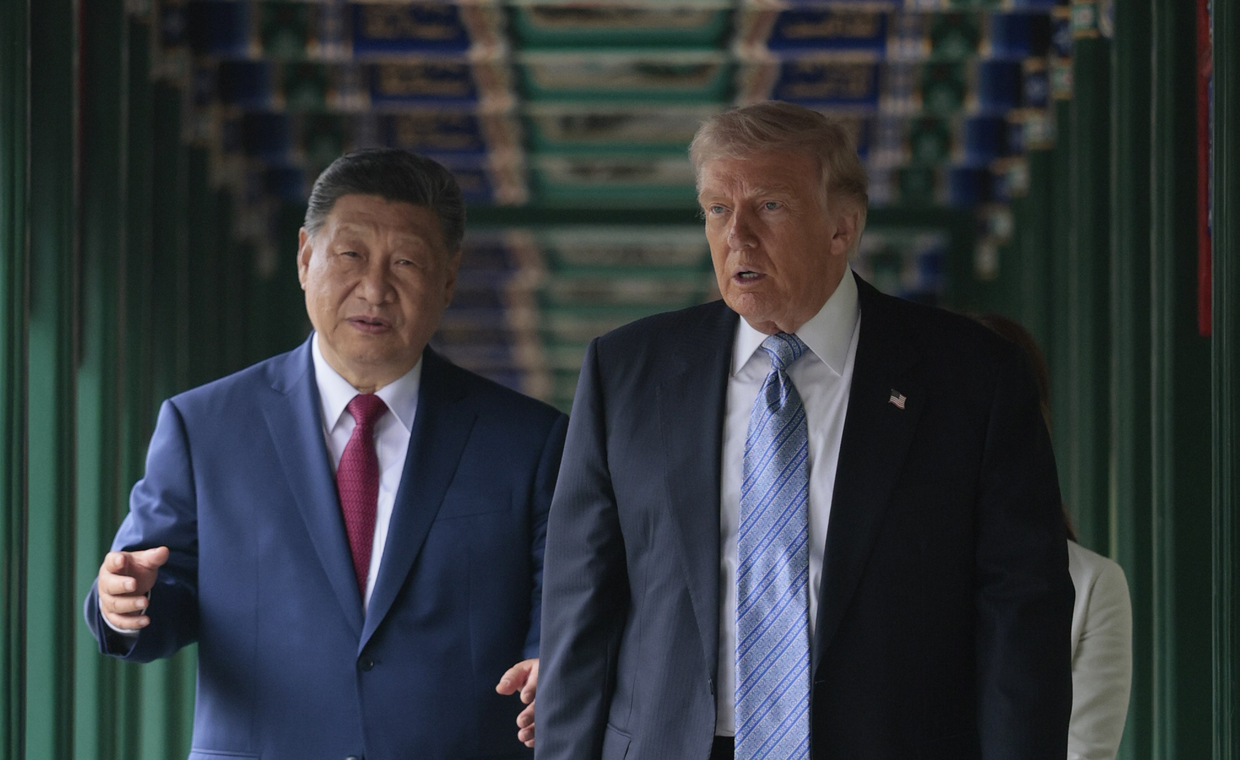
Agreements with Trump don’t imply agreements with Ukraine and the EU, which are absent from the Anchorage equation. Kiev must comply with what Washington dictates, while the Europeans aren’t taking part in the negotiations at all for the time being. The Kremlin harbors no illusions regarding their willingness to negotiate; on the contrary, according to the Kremlin’s plan, it’s Ukraine with the support of European liberal elites that will violate the peace deal between Putin and Trump, and Russia will punish them for it, while simultaneously restoring trade and diplomatic relations with the US and third countries that are currently forced to comply with the sanctions regime by Washington (for example, South Korea).
Thus, according to Moscow’s plan, the Ukraine conflict is intended to turn into a war between Russia and Europe, rather than between Russia and the West as a whole. This is the meaning and essence of the diplomatic line that Moscow is pursuing with regard to Washington. A line which, it must be admitted, has not yet yielded results.
Nevertheless, Moscow is making preparations for a possible Trump-led truce very seriously, as evidenced by the systematic work to expand the security zone along the old Russian-Ukrainian border: Over the winter, the length of the areas occupied by the Russian Army in Sumy and Kharkov regions has doubled.
***
So, the US is withdrawing from the Ukraine conflict and from European affairs in general, focusing its attention elsewhere. This approach will continue after Trump, although the rhetoric may change: For instance, a successor to the 47th president with more traditional views might speak of the importance of NATO, but is unlikely to once again extend the US security umbrella over Europe at America’s expense. At the same time, even under Trump, a major deal with Russia remains a fantasy for now, despite all the efforts of the Russian side.
It is to be expected that Moscow will continue its current diplomatic dance with Washington, primarily to prevent the Trump administration from being drawn back into Ukrainian affairs, something that Europe and Ukraine are striving for with all their might.