Post-Soviet bloc emerging as ‘economic center of multipolar world’ – Russian deputy FM
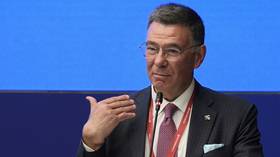
The Eurasian Economic Union (EAEU) is seeing steady growth and shifting its economic ties toward greater integration among member states and closer cooperation with the Global South, Russian Deputy Foreign Minister Aleksandr Pankin said in an interview with RT.
The deputy foreign minister said intra-EAEU trade reached $95 billion last year, nearly double what it was in 2014, before the union was established. He also pointed to strong growth in trade with external partners, saying turnover in 2025 had grown about 90% with Vietnam, 170% with Iran, and more than doubled with China.
“The union plays a defining role in its member states’ economic growth as part of its international dimension,” he said stressing that its real GDP grew 1.7% last year, “which is not bad at all given the circumstances.”
Pankin said Western sanctions had served as a “stress test” for the EAEU, pushing the bloc to diversify trade, develop new logistics routes and boost technological and economic self-sufficiency. He said the measures had made the union more resilient and less dependent on external partners.
The official believes the bloc was shifting its economic ties toward the Global South as the share of Western countries in its trade declined. He pointed to Asia, Africa and Latin America as key areas of focus, highlighting closer cooperation with China, ongoing talks with India, and expanding ties with Iran, Vietnam, the UAE and Indonesia.
Pankin said the EAEU was becoming “an important economic center in a multipolar world,” with ties extending beyond trade to cooperation with organizations including the United Nations, SCO and ASEAN. He added that the bloc has signed more than 80 memorandums with international partners, mainly from the Global South.
See the full interview below