‘Primakov Readings’ forum to examine a ‘world without rules’ amid global fragmentation
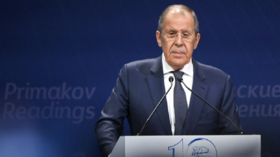
Russia is preparing to host the 12th annual Primakov Readings International Forum, one of the country’s leading platforms for discussion of global politics and the world economy. The event, themed ‘World Without Rules: Power Game?’, will take place in Moscow on June 23–24, 2026, at the Radisson Blu Leninsky Prospect Hotel, coinciding with the 70th anniversary of IMEMO.
The forum is expected to bring together senior Russian officials, including presidential aide Yury Ushakov, Foreign Minister Sergey Lavrov, and Deputy Speaker of the Federation Council Konstantin Kosachev, alongside leading Russian and international experts in international security, global politics, and economics, as well as diplomats, politicians, and representatives of public organizations.
According to organizers, the program will focus on some of the most pressing challenges in international affairs. Key themes will include the global fallout from regional conflicts, the domestic drivers of US foreign policy, the Middle East conflict and its дальнейшая evolution, scenarios for a new world order, risks to global trade and investment, Eurasian security during Russia’s chairmanship of the CSTO, and AI-driven international competition alongside a new round of military-technological rivalry.
Special attention will be given to prospects for de-escalation in the Middle East, the possible creation of a new regional security architecture, and the role of non-Western countries in stabilizing the region. Participants are also expected to discuss the consequences of the termination of the New START treaty, the risk of a broader collapse of the arms-control system, and the impact of emerging military technologies on strategic stability as the arms race accelerates.
“Both in Russia and globally, the liberal ‘rules-based’ world order has faced harsh and fair criticism. In 2022–2026 it ultimately faded into history,” said Aleksandr Dynkin, president of the Primakov Institute of World Economy and International Relations (IMEMO) and a member of the Russian Academy of Sciences. “We are witnessing a breakdown: there is an obvious fragmentation of the global political and economic architecture, and an almost complete dictatorship of force in international security backed by states’ combined economic and military power, ignoring international law and its institutions.”
Dynkin said that under these conditions, the importance of the remaining “anchors of stability” is growing, along with the demand for strengthening international institutions that can serve as alternatives to Western-led ones. He named Russia-China and Russia-India ties among such anchors, and pointed to BRICS, the Shanghai Cooperation Organization (SCO), the Eurasian Economic Union (EAEU), and ASEAN as key institutions shaping this process.
The event is expected to bring together around 50 experts from 20 countries, including China, India, the US, Iran, the UK, Uzbekistan, and Belarus.
Organized by IMEMO together with the Evgeny Primakov Center for International Cooperation, the forum continues the legacy of Evgeny Primakov, the statesman and scholar after whom it is named. First launched in 2015, the Primakov Readings have become an annual gathering of leading specialists in international relations and the global economy.
Media representatives can apply for accreditation via the official website of the Primakov Readings forum.