
Washington thinks it can fix Libya. It may be about to break it again instead

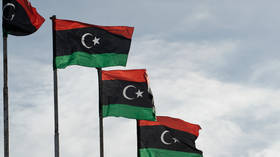
For most of the past decade, the idea of Libya’s three main governing bodies sitting down and agreeing on anything felt almost theoretical.
The country has operated as two parallel states since the civil war of 2014 – a UN-recognized government in Tripoli and a rival eastern administration tied to the parliament in Benghazi and the military command of Khalifa Haftar. Repeated international attempts to bridge that divide produced agreements that looked promising on paper and collapsed almost immediately in practice. Peace conferences were held in Geneva, in Skhirat, in Cairo. Special envoys came and went. The UN went through so many Libya representatives that keeping track of them became a minor diplomatic sport.
Which makes what happened on June 18, 2026 genuinely notable, even if caution is more than warranted. The heads of Libya’s three main political bodies – Speaker of the House of Representatives Aguila Saleh, Chairman of the High Council of State Mohammed Takala, and Chairman of the Presidential Council Mohamed al-Menfi – agreed on a roadmap to hold simultaneous presidential and parliamentary elections before February 17, 2027, and established a high-level committee to oversee the process. For a country that has been promising elections since 2011, eight months is an ambitious timeline. But the fact that these three figures signed the same document on the same day is itself something that would have seemed improbable not long ago.
The agreement nobody expected
The statement these three men issued was laden with the kind of institutional language that Libyan political documents tend to favor. The roadmap includes completing the constitutional and legal framework required for presidential and parliamentary elections, unifying sovereign institutions, and strengthening national sovereignty. It also calls for economic and financial reforms aimed at protecting public funds and safeguarding the unity of state institutions, alongside a pathway toward a permanent constitution – something Libya has been governed without for 15 years. The absence of this document is not just a legal technicality; it is one of the primary reasons every political arrangement has lacked the legitimacy to survive its first serious crisis.
Perhaps the most specific detail – one that surprised many observers – was the agreement to work on a unified national budget for 2027 through a joint technical committee. That might sound like procedural housekeeping, but in the context of Libya, it is anything but. In April 2026, with American assistance, Libya’s two parallel governments reached an agreement on the first unified state budget since 2013, worth around $30 billion. The Central Bank governor described it as proof that Libya is capable of overcoming its differences when there is a unified vision for its future.

What makes this moment different from the many failed attempts before it is not the document itself but the convergence of pressures that produced it. Elections were originally scheduled for December 2021. They were postponed indefinitely when disputes over candidate eligibility and the constitutional basis for voting proved irresolvable. The June 2026 agreement did not emerge from some sudden transformation in Libyan politics. It emerged from the intersection of domestic fatigue, regional coordination, and perhaps most decisively, an unusually direct American intervention.
The man from Washington and his very specific plan
Massad Boulos is not a career diplomat. He is a Lebanese-American businessman, a senior adviser to President Donald Trump on Arab and African affairs, and – as Libyans have noted with characteristic dry humor – the father-in-law of Tiffany Trump, which has earned him the nickname ‘Tiffany’s father’ in local political circles. He arrived at the Libyan case without the accumulated hesitations of a career envoy, and he has moved accordingly – quickly, directly, and with a clear sense of what Washington wants out of this.
Speaking to the Financial Times in mid-June, Boulos was unusually direct about the objectives: “Our plan is to have one unified government and unify all institutions,” he said. The economic dimension behind this goal is worth pausing on. Washington’s primary motivation appears to be rapid stabilization to open the door for American energy investments, specifically aiming to double Libyan oil production to 3 million barrels per day by 2030, with companies like Chevron and ConocoPhillips in mind. Libya holds the largest proven oil reserves in Africa, and that fact has never been far from any external actor’s calculations about the country.
The mechanics of the Boulos plan, which have leaked in pieces in recent months, are more specific than his public statements suggest. A key episode was a secret meeting in Rome in September 2025, at which major figures from the two opposing camps sat face to face for the first time – Saddam Haftar, the son and deputy commander of Khalifa Haftar, and Ibrahim Dbeibeh, nephew and adviser of GNU Prime Minister Abdul Hamid Dbeibeh. Boulos mediated. Further meetings followed in Paris in January 2026. The proposal that emerged would create a new Presidential Council headed by Saddam Haftar with executive powers, alongside a unified government led by Dbeibeh, with military command divided between the families along geographic lines. In essence, Washington is proposing to hand the east a president and let the west keep its prime minister – a division that resolves the impasse by distributing the spoils between two dominant families rather than by addressing the institutional and democratic questions that produced the impasse in the first place.
Haftar’s forces described the Boulos proposal as more realistic than previous initiatives, signaling readiness to negotiate while insisting that any process must be based on broad national consensus. The regional choreography around the plan has been equally deliberate. Foreign ministers from Egypt, Saudi Arabia, and Türkiye met with Boulos in Cairo. Egyptian and Turkish intelligence chiefs made parallel visits to Tripoli and Benghazi respectively. Regional powers that spent years backing opposing sides in Libya’s conflict are now, at minimum, coordinating their positions – a shift that matters enormously for any settlement’s durability.
Crucially, however, Haftar’s forces did not endorse the trilateral institutional agreement – backing the Boulos plan instead. That gap between the two roadmaps is the central tension that will determine whether anything agreed in June actually leads anywhere.
Washington’s dealmaking instinct and the limits of transactional diplomacy
There is something genuinely refreshing about the Trump administration’s willingness to move fast and skip the elaborate multilateral process that has produced so little in Libya over the past decade. Speed and directness have their value, especially when the patient alternative has spent years going nowhere. But the administration’s track record in the region raises serious questions about what happens after the deal is struck.
A pattern has emerged clearly enough to name. Washington identifies a problem, assigns an envoy with dealmaking authority and White House proximity, constructs an arrangement that serves American strategic and commercial objectives, then declares success and moves on. The difficulty is that the region rarely cooperates with the schedule.
Gaza illustrated this with painful clarity. American mediators produced ceasefire frameworks that looked functional on paper, secured nominal agreement from parties under significant pressure, and announced progress – which then evaporated within weeks. The underlying dynamics had not been addressed because the dealmaking logic did not require them to be. What the arrangement needed was American satisfaction, not regional stability. Lebanon offered a similar lesson – every ceasefire that American envoys celebrated as an achievement failed to alter the fundamental power equation between armed factions and a hollowed-out state. The Iran war demonstrated the same structural limitation at larger scale: Decisive action addressed specific capabilities at specific moments but left untouched the deeper question of how to incorporate Iran’s regional role into a stable order rather than simply suppress it until the next crisis.
Libya is now on that same list. The Boulos plan is, at its core, an American interest dressed in Libyan political clothing. A unified government means a single counterpart for US energy companies. Elevating Saddam Haftar solves the succession problem around his aging father while creating an eastern interlocutor Washington can work with. Retaining Dbeibeh keeps the west from open revolt. It is, from a certain angle, an elegant solution.
The problem is that Libya’s political culture, its tribal geography, its armed faction ecosystem, and its deep institutional mistrust cannot be resolved by elegance. A deal between two families does not disarm the militias that operate outside either family’s control. It does not address the grievances of populations in Fezzan and the south who have been almost entirely absent from every negotiation that claimed to speak for all Libyans. It does not build the electoral commission credibility that would make the results of any election trustworthy enough to be accepted by the losers. And it does not resolve the question of what happens when, inevitably, the Haftar and Dbeibeh interests diverge – as they will, because they always have.
There is also the question of what happens to everyone who is not a Haftar or a Dbeibeh. Libya has a functioning civil society, political parties, women’s organizations, tribal structures that cut across the east-west divide, and millions of ordinary citizens who have been waiting for an election since 2011. Any arrangement that is essentially a negotiation between two families over who gets which office risks producing the same legitimacy deficit that has doomed every previous arrangement – only this time with American backing, which makes it harder to disown.
The UN special representative was right that the tools exist and the direction is known. What the history of American dealmaking in the region makes increasingly clear is that the tools need to be wielded by people willing to stay in the room long enough to see through what they started. Washington’s attention in the Middle East and North Africa has a well-documented tendency to move on once the headline agreement is secured. Libya, which has lived through 15 years of international interest followed by international distraction, knows this better than most. The window that opened in June 2026 is real. But windows in Libya have a way of closing fast, and the people with the most power to keep this one open are the ones with the strongest incentives to declare victory and look elsewhere.