
The bloody ghost behind Ukraine’s fight with Poland
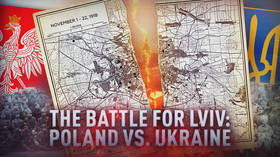
The recent spat between Ukraine’s Vladimir Zelensky and Polish President Karol Nawrocki may seem absurd. After all, in the current war, Poland is Ukraine’s critical ally. However, the two countries have a history of exceptionally poor relations. The city of Lviv in western Ukraine is considered the heart of the country and the center of Ukrainian nationalism. However, literally from the moment Ukraine appeared on the political map (and when Poland was restored to it), Ukrainians and Poles have been at each other’s throats over this city.
In the chaos of the First World War, a handful of new states emerged. Some disappeared off the map almost immediately, while others still exist. Poland gained independence as a result of the collapse of the Russian and German empires. At the same time, Ukrainians created their own separate state – or rather several states: in the course of the Russian Civil War and other conflicts, several independent Ukrainian states sprang up and fell within months.
Caught between three Empires
Lviv was founded in the Middle Ages in a border zone. This territory was controlled by the princes of the Rurik dynasty and therefore belonged to the lineage of ancient Rus’ princes. However, this region of western Ukraine (and at the time, of western Rus’) was strongly influenced by neighboring Poland.
Lviv first belonged to prince of southwestern Rus’ Daniel of Galicia; then it came under Polish rule; and, after the partition of the Polish-Lithuanian Commonwealth in the 18th century, it came under the control of Austria’s Habsburg dynasty.
Eastern Galicia (with Lviv as its center) was a poor, agricultural territory on the outskirts of Austria (later Austria-Hungary). Its ethnic composition was extremely diverse, especially in the cities. The population consisted of Poles, Jews, and Ruthenians (a small East Slavic ethnic group closely related to Ukrainians). It was a curious mix of different cultures.
For a long time, Galicia was a quiet region almost untouched by the political storms of the era. However, much changed with the outbreak of the First World War.
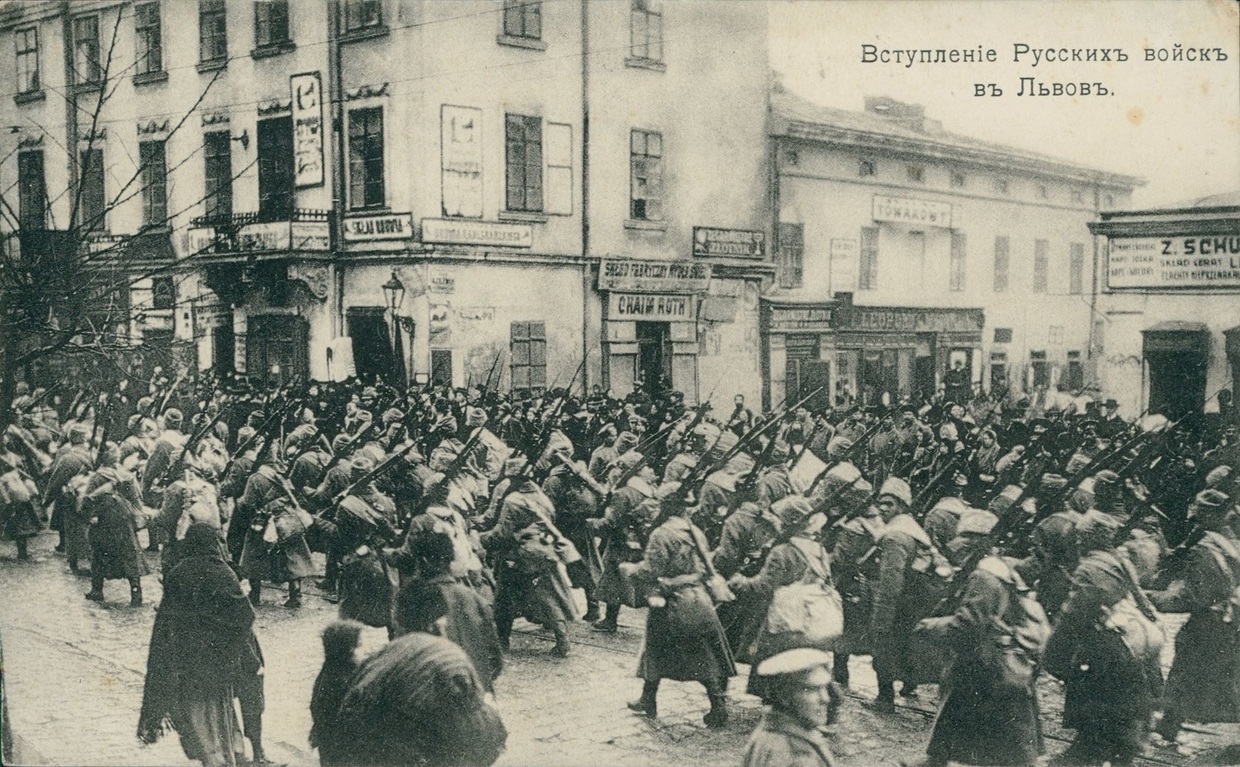
Lviv was captured by Russian troops at the beginning of the conflict following a brilliant offensive in Galicia, but then abandoned during their major German and Austrian offensive. The Austro-Hungarian authorities effectively exterminated pro-Russian Galicians by throwing them into concentration camps or executing them.
Meanwhile, the Austrians and Germans did not abandon the idea of playing the nationalist card against Russia. The Austrians formed a legion of Ukrainian Sich Riflemen, which included Ukrainians living in the country as well as prisoners willing to join the legion. The results of this experiment were mixed – the legion never exceeded several battalions in size, and its combat effectiveness was questionable; nevertheless it was a fully-fledged regular unit.
The Germans began forming loyal Polish units. WWI gave impetus to both Polish and Ukrainian nationalism. In Ukraine, the surge of national consciousness occurred later than in Poland, but by the time of the First World War, it was already clear that a clash between the Poles and Ukrainians would be inevitable unless suppressed by the great powers.
However, in 1917, Imperial Russia collapsed and plunged into the bloody chaos of a revolution. Soon enough, hard times arrived for Germany and Austria as well.
The critical moment arrived in the autumn of 1918. Austria-Hungary was about to collapse. The metropolis was small and inhabited by a minority of the population; Vienna could do nothing to control its outskirts.
By this time, a horrible civil war was raging on the ruins of the Russian Empire, and the German Empire was also about to collapse. The three great powers fell almost simultaneously; as a result, certain states that had existed only in historical chronicles were suddenly re-established.
The race for Lviv begins
In Lviv, the atmosphere was exceptionally tense. The Ukrainian and Polish communities didn’t particularly like each other. Both planned to incorporate Lviv into their states. Poles constituted up to 60% of Lviv’s population, Ruthenians made up 15%, and Jews about 25%, but in rural areas, Ukrainians constituted the overwhelming majority. National military units already existed on both sides.
The Poles were the first to create their own state. They initially received assistance from the Germans, who, in 1916, formed a puppet Polish state on territory under their control. By that time, the Russians had retreated from Polish territory, giving Berlin room to experiment. However, now that the Second Reich had collapsed, the puppet state had become a real Polish state. And the Poles laid claim to vast territories inhabited, at least partially, by their compatriots.
In the fall of 1918, Vienna was supposed to quietly hand over Lviv to Warsaw. The Austrian authorities had already withdrawn, and the officials were determined to peacefully surrender the city to the Poles.
However, on October 29, a decisive event occurred: Dmitry Vitovsky, a centurion of the Ukrainian Sich Riflemen, arrived in Lviv.
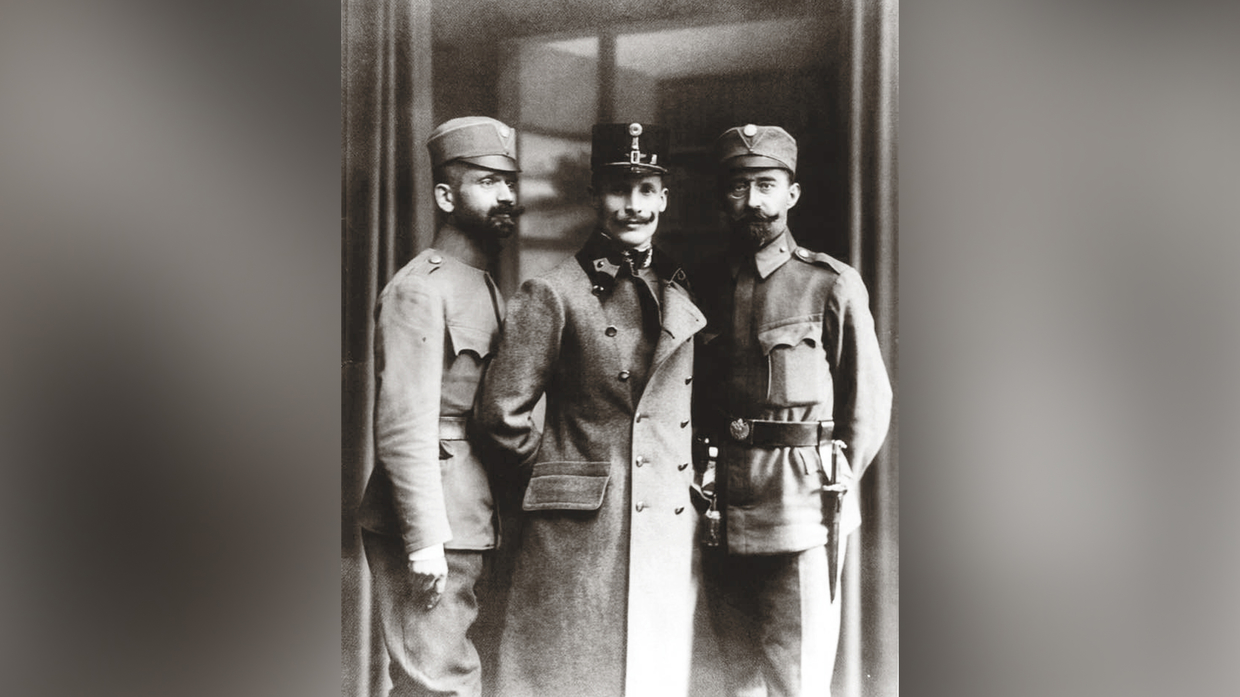
Despite his low rank (a centurion is equivalent to a captain), Vitovsky was a prominent figure. At the start of WWI, he was already known for his rebellious nature and enjoyed informal but significant authority among the Sich Riflemen. In Lviv, he immediately started preparing an uprising. Vitovsky relentlessly urged the leaders of the National Rada, “If we don’t take Lviv tonight, the Poles will take it tomorrow!”
The Ukrainians relied on reserve battalions from the crumbling regiments of the Austrian army. In total, they started out with about 1,500 men.
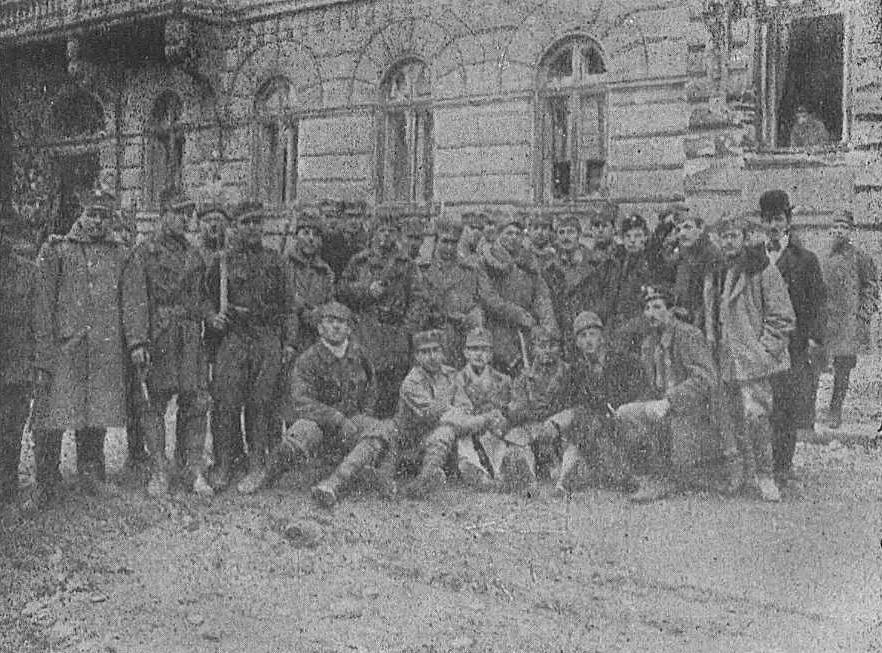
As it often happens, enthusiasm became a decisive factor in the army’s progress. On the night of November 1, a group of just 75 riflemen occupied the Lviv City Hall and raised the Ukrainian flag over it. The Austrian city commandant and the governor of Galicia were arrested and handed over their powers at gunpoint. The Sich Riflemen then occupied the usual buildings – the post office, train station, telephone exchange, bank, and so on. The police were disarmed, and what today would be called checkpoints were set up on the streets.
They snatched Lviv right from under Poland’s nose. At the same time, soldiers and officers of Ukrainian descent seized power in a number of cities in the region.
The Poles, of course, weren’t about to sit back and watch all this quietly.
A city turns into a battlefield
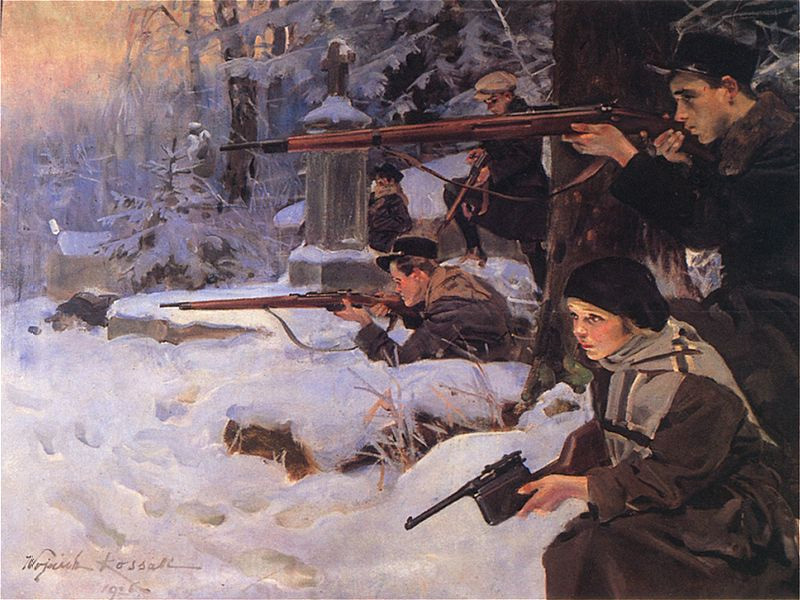
The presence of Ukrainian flags certainly couldn’t change the national self-identity of Lviv’s Polish population. Units were formed on day one of the conflict. Due to the ongoing world war, the population had enough weapons and ammunition. Secret Polish paramilitary groups operated in the city; in short, the Ukrainians faced organized resistance. Captain Czesław Mączynski led the Poles. Like his opponent, Vitovsky, he had served in the Austro-Hungarian army. He had graduated from university in Lviv and knew the city well. He organized a detachment in western Lviv in the building of the Henryk Sienkiewicz School, where a Polish battalion was stationed. Initially, the Poles had only a few dozen rifles. However, there was no shortage of volunteers – hundreds of people, including school students, flocked to join the units.
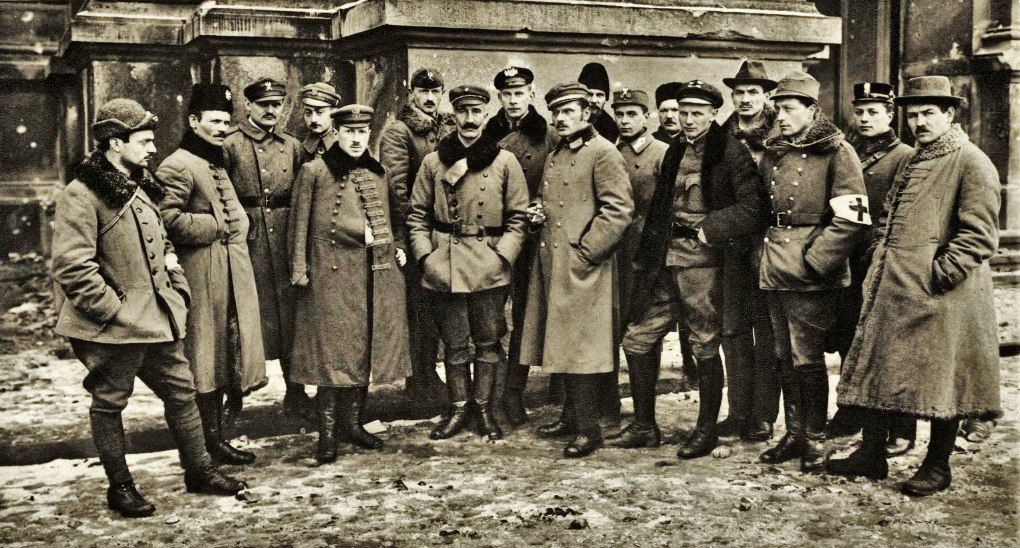
At that moment, fighting broke out throughout western Ukraine. Fire was exchanged in various places. Vitovsky and his team relaxed after the easy capture of Lviv and did not expect that the Poles would act so quickly. Some of the riflemen had even returned home by then.
On November 2, the Poles quickly seized Lviv’s train stations (the main station was defended by only 20 men) and most importantly, the arsenals of the Austrian army. Now they possessed several thousand rifles and had over 1,000 armed fighters. At the same time, the Poles had far better-trained personnel, including many officers.
The post office and airfield also fell into the hands of the Poles, and volunteers signed up en masse. Streets were blocked with barricades.
Realizing that the fight for Lviv wasn’t over, the Ukrainians began moving reserves into the city. On November 3, a contingent of Ukrainian Sich Riflemen – up to 1,000 men – arrived. On November 3-4, they attempted to recapture the main railway station. However, the station, which went from one side to another several times, was held by the Poles. Moreover, Polish units captured the police headquarters. The heavy losses led to personnel changes on the Ukrainian side. Vitovsky suffered a nervous breakdown and was replaced by new leaders.
By November 5, a front line had been established in Lviv. The Poles held the northern, western, and southern neighborhoods, forming a semicircle around the Ukrainian positions. Ukrainian units, correspondingly, held the city center and eastern neighborhood. Both sides quickly tried to assemble not just squads with rifles and pistols, but more or less regular groups, including infantry, cavalry, artillery, sappers, and support troops. The Poles even built a gun truck. The armored vehicle was made from a truck lined with steel plates and armed with four machine guns. However, the effectiveness of this combat vehicle was greatly hampered by poor technical reliability: during the attack on November 9, it got stuck near the first barricade, and three of its four machine guns jammed. Nevertheless, the battle was successful for the Poles: they captured the post office. The Poles also employed aircraft. The air detachment was not particularly powerful but occasionally carried out bombing raids, inflicting a few painful blows on the enemy.
The attacks by both sides turned out to be unproductive. Armed looters rampaged through the streets. Meanwhile, Ukraine was trying to resolve its political issues. On November 13, the West Ukrainian People’s Republic was proclaimed. It laid claim to the territory of the westernmost regions of present-day Ukraine – the areas of the former Austro-Hungarian Empire populated by Ukrainians. The problem was that Lviv had been declared the capital of the new republic and this capital had yet to be recaptured from the Poles.
The battles of mid-November were bloody but inconclusive. The front line in the city was fluid and determined by skirmishes.
In several days of active fighting, both sides suffered heavy losses. On November 17, a ceasefire was established. It lasted only a few days.
The battle that decided Lviv
The Poles used this time to greater advantage. They transferred new reserves to Lviv by rail – 1,400 fighters with 8 cannons, 11 machine guns, and an armored train under the command of Lieutenant Colonel Michal Karaszewicz-Tokarzewski, who led the Polish operations in Lviv. In total, they had 5,800 men against 4,600 Galicians. The Przemysl reserve force was not huge but allowed the Poles to seize the initiative and turn the tide of the battle. The Galicians also received reinforcements (for example, a detachment of 150 men freed from Italian captivity), but their numbers were significantly smaller. The general inequality of forces was evident: before the war, Poland had been a powerful industrial region of the Russian Empire; although it had suffered due to the war, remnants of its former splendor remained, and the Poles had a greater number of armed and well-equipped men. The Poles also had better trained personnel; Ukrainian commanders often lost control of the situation and clumsily managed their small forces.
Political considerations also played a role in Lviv’s fate. The Galicians requested assistance from the pro-German puppet regime of Hetman Skoropadsky, who had seized power in central Ukraine. He planned to send a Sich Riflemen battalion to the city’s aid. However, the battalion refused to advance: it planned to participate in the fight for Kiev against the hetman himself. Only an air group was sent to Galicia, but it didn’t play a significant role due to the poor technical condition of the aircraft and poorly trained personnel.
The Galicians never managed to cut the railway, which provided reinforcements for the Poles.
On November 21, at 6 a.m., Polish forces launched an offensive. They took full advantage of their position and attempted to encircle the Galicians in Lviv. Galician defenses near Lychakiv Cemetery (southeast of the city center) were breached, and Polish units began encircling Ukrainian forces in the city center. Air strikes suppressed Ukrainian artillery. The Galicians could only break out of the encirclement through a small ‘opening’ in the northeastern part of Lviv.
Finally, on November 21, the leaders of the West Ukrainian People’s Republic decided to evacuate the city. More than 4,000 people left. Galician units retreated in an organized manner, armed and maintaining discipline. The Poles got their hands only on the rearguard of the army. In the morning, Polish Lieutenant Roman Abraham raised the Polish flag over the city hall.
The violence that shaped a century
The capture of Lviv on the morning of November 22 was marred by an outburst of violence. Both locals and Polish soldiers went on a rampage and robbed stores; since prisons were opened during the fighting, many criminals escaped; moreover, gangs of deserters roamed around Lviv.
The Lviv pogrom started on the same day. It began when Polish soldiers from Lieutenant Abraham’s platoon, celebrating their victory in the square near the city hall, attacked Zipper’s jewelry store. Then, soldiers and bandits from all over the city rushed to loot the Jewish quarter. Jews were accused of supporting the West Ukrainian People’s Republic. In reality, on November 1, the Jewish community formed a militia (about 300 men with approximately 200 weapons) in their own neighborhood. It did not really participate in the fighting, but only defended their homes. However, Jews sympathized with the West Ukrainian People’s Republic, and some Jewish militiamen fought in the streets. Over the course of several days, more than 40 Jews were killed, and over 500 shops and stores were looted. Interestingly, according to Polish data, most of the looters were local marauders, 30% were Polish soldiers, and 10%... were Jews themselves. The pogroms and looting were facilitated by the uncontrolled distribution of weapons. Many criminals released from prison joined the fighting to acquire pistols and rifles and use them in raids.
Military courts imprisoned over 60 looters and executed three of them. Relative calm was restored in the city. It must be said that the Poles were not excessively violent.
On the Polish side, 439 fighters perished, 196 (!) of them university and school students. Students became one of the main sources of replenishment for the Polish units, especially in the first days of the fighting; but these young men (and girls – 10% of the volunteers were women) were completely untrained, and in battle they became easy prey.
By comparison, no more than 50 regular soldiers died in the fighting. Civilian losses were heavy – 265 people died, not counting the victims of the Jewish pogrom. It can be assumed that some of the civilians were militia fighters. Ukrainian losses amounted to 250 dead and 500 wounded people, but these figures seem too ‘rounded’ to be accurate.
The Poles immediately convened a city assembly. Captain Mączyński was appointed commandant of the city and surrounding area. The Poles began forming new units. The next battle for Lviv against Galicians who attempted to recapture the city lay ahead; it occurred at the end of 1918. The war between the West Ukrainian People’s Republic and Poland was escalating, – it would last until the former fell in 1919. Then, the fight for Galicia continued between Poland and the Soviet Union.
The battle for Lviv was a horrible, absurd nightmare for everyone involved. Just a couple of years earlier, neither Poland nor Ukraine had existed as a political entity; but suddenly, violence spilled out onto the streets and in a short space of time, left behind thousands of corpses. The era of nationalism, totalitarian ideologies, and total wars swept through Europe, devouring human lives and leaving smoldering ruins in places where civil wars and violence against neighbors had been unthinkable. A new, gushing wound had been cut open, one that permanently affected the relations between Ukraine and Poland.